
Views: 0 Author: Site Editor Publish Time: 2026-01-14 Origin: Site


Achieving a showroom-quality shine on a vehicle requires more than just high-quality pigment. Many DIY enthusiasts and even some budding professionals overlook a crucial component of the process. They often ask, "What thinner to use for car paint?" The answer to this question determines whether your project ends in a mirror-like gloss or a wrinkled disaster. The chemistry behind an automotive refinish relies heavily on the solvents used to reduce the viscosity of the paint.
Selecting the correct car paint thinner allows the paint to atomize correctly through the spray gun. It ensures the material lays flat on the body panel and evaporates at the right speed. If you apply the wrong paint thinner on car surfaces, you risk ruining expensive materials and wasting hours of preparation labor. This guide explores exactly how to choose the right medium for your specific project.
Why do professionals stress over solvent selection? The primary reason involves the chemical compatibility between the reducer and the paint resin. A car paint thinner acts as a vehicle that carries the pigment to the surface before evaporating. If this vehicle fails to perform correctly, the automotive refinish process collapses.
Using a generic solvent instead of a dedicated car paint thinner often leads to chemical biting. This occurs when the solvent is too aggressive and eats into the underlying layers of primer or old paint. Conversely, a weak solvent might not dissolve the paint resins properly, leading to clumping or clogging in your spray equipment. When you use the right paint thinner on car exteriors, you ensure that the paint flows smoothly, levels out perfectly, and bonds securely to the substrate.

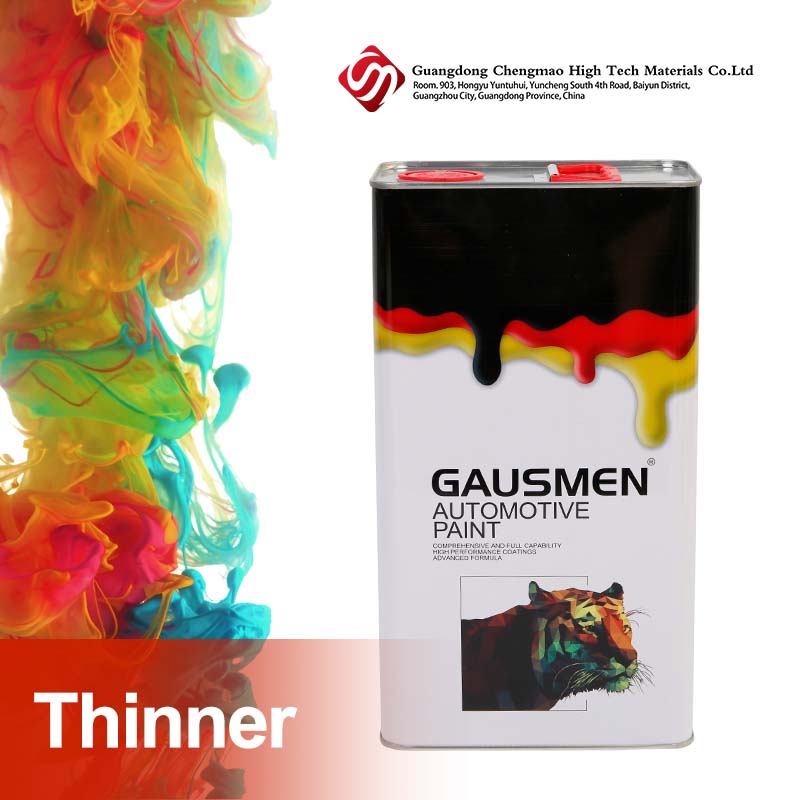
How do you distinguish between the various liquid solvents available on the market? Understanding the different types of car paint thinner helps you match the fluid to your specific paint system.
Why is lacquer thinner disappearing from professional body shops? Historically, this was the go-to solvent for nitrocellulose paints. However, lacquer thinner is extremely aggressive. If you use this type of paint thinner on car plastics or modern urethane primers, it may cause lifting or wrinkling. While it cleans equipment effectively, it is rarely the correct choice for reducing modern automotive refinish topcoats.
Why are urethane reducers the industry standard today? Most modern cars are painted with urethane basecoats and clearcoats. A urethane-grade car paint thinner (often called a reducer in this context) is chemically engineered to link with the hardeners in the paint. This ensures the automotive refinish cures to a durable, UV-resistant shell. Using a standard thinner instead of a urethane reducer in these systems will prevent the paint from hardening, leaving the finish soft and sticky.
Does enamel paint require a specific approach? Yes. Enamel paints cure differently than urethanes. An enamel-specific car paint thinner helps promote flow and gloss retention. If you use a fast-evaporating lacquer thinner in synthetic enamel, the paint will "skin over" too quickly, trapping solvents underneath. This ruins the automotive refinish by causing solvent pop (tiny bubbles) later on.
Did you know that the weather dictates your chemical mixture? Manufacturers produce car paint thinner in different grades based on evaporation rates. Using a paint thinner on car panels without considering ambient temperature is a recipe for texture issues like "orange peel" or "dry spray."
A car paint thinner must evaporate slowly enough to let the paint flow out flat, but fast enough to prevent runs. A professional automotive refinish technician always checks the thermometer before mixing their cup.
Thinner Grade | Ideal Temperature Range (°F) | Ideal Temperature Range (°C) | Expected Behavior |
|---|---|---|---|
Fast / Spot Repair | 60°F - 70°F | 15°C - 21°C | Evaporates quickly. Prevents runs in cold weather. Best for small areas. |
Medium / Standard | 70°F - 85°F | 21°C - 29°C | Balanced evaporation. The "go-to" choice for most full automotive refinish jobs. |
Slow / High Heat | 85°F + | 29°C + | Evaporates slowly. Keeps paint wet longer to prevent dry spray in hot weather. |
What happens when the chemistry goes wrong? The results of using an incompatible car paint thinner are usually immediate and heartbreaking.
One common issue is "blooming" or "blushing." This happens when a fast-evaporating car paint thinner is used in humid conditions. The rapid evaporation cools the surface, causing moisture to condense into the wet film. This leaves a milky haze within your automotive refinish.
Another defect is "die-back." If the paint thinner on car bodywork is trapped under a cured surface layer because it was too slow for the weather, it will eventually force its way out. This causes the gloss to fade weeks after the job is done, leaving the finish dull. To maintain a high-quality automotive refinish, you must match the solvent speed to the environment.
Is there a universal mixing ratio? Unfortunately, no. Every paint manufacturer specifies a different ratio for their automotive refinish products. It is typically expressed as Paint:Hardener:Thinner (e.g., 4:1:1).
Guessing the amount of car paint thinner leads to poor coverage or runs. Too much car paint thinner creates a watery mixture that runs down vertical panels. Too little causes a thick, textured surface that looks like an orange skin. You must use a calibrated mixing cup to measure the exact amount of paint thinner on car coating products. Precision here ensures the color matches the factory standard and the durability meets expectations.
Should you save money by buying "universal" solvents? While tempting, universal thinners are risky for a high-end automotive refinish. They are often a blend of various recycled solvents. Consequently, their evaporation rates are inconsistent.
When you use a premium, system-specific car paint thinner, you pay for consistency. You know exactly how that paint thinner on car substrates will react. A universal product might work well once and fail the next time, destroying your automotive refinish consistency. For professional results, sticking to high-grade car paint thinner is the only safe option.
Who supplies reliable solvents for these delicate tasks? Sourcing your materials from reputable manufacturers is as important as your technique. Quality control in the production of car paint thinner ensures that the moisture content is low and the chemical purity is high.
When you are looking for dependable products for your next automotive refinish, consider brands that specialize in chemical solvents. Chengmao has established a reputation for providing industrial-grade solutions. Chengmao offers a range of thinners that ensure consistent evaporation rates and compatibility with various paint systems. Whether you need a slow reducer for a hot summer day or a fast car paint thinner for spot repairs, Chengmao delivers the quality professionals trust.
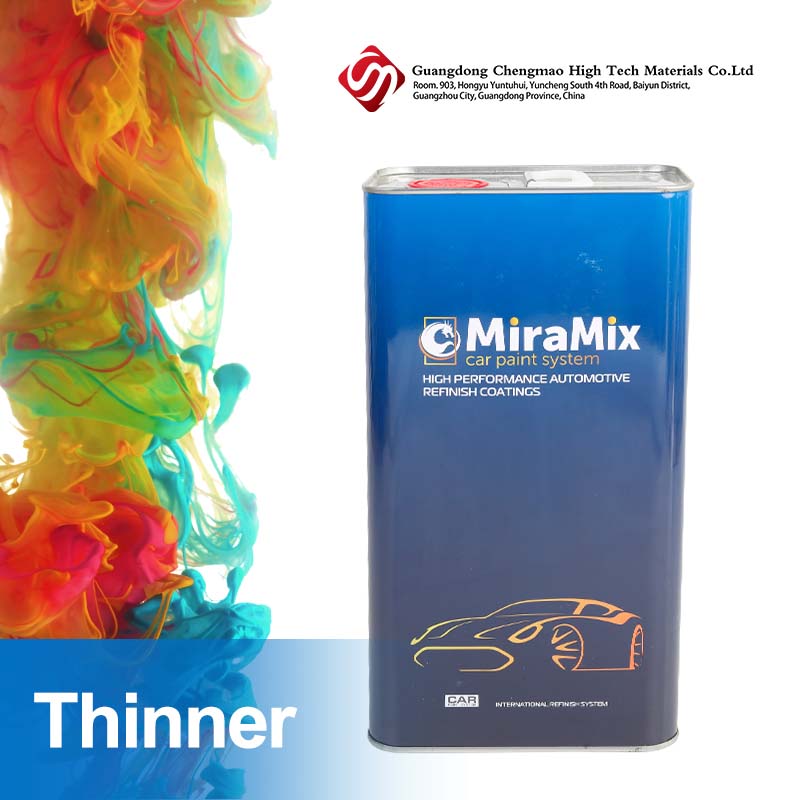

Is acetone a viable alternative? Generally, no. Acetone is too volatile and aggressive for use as a reducer in a topcoat automotive refinish. It evaporates almost instantly, which prevents the paint from leveling out. While it is excellent for cleaning tools, using straight acetone as a car paint thinner will likely result in a dry, rough finish and may damage plastic car parts.
Does moisture in the air change how the thinner works? Yes. High humidity can cause "blushing," where the paint thinner on car panels evaporates and cools the surface, trapping water. In very humid conditions, you should use a slower car paint thinner or add a specific "retarder" to the mix. This allows moisture to escape before the film hardens, saving your automotive refinish from becoming cloudy.
Does car paint thinner go bad? If sealed tightly, car paint thinner can last for years. However, if the cap is loose, the most volatile components evaporate first, changing the chemical balance. This makes the remaining liquid less effective as a paint thinner on car applications. Always store your automotive refinish solvents in a cool area with the lid secured tightly.
Can you mix leftover solvents? It is not recommended. Different brands use different chemical blends for their car paint thinner. Mixing them can cause unpredictable chemical reactions, leading to gelled paint or separation. For a predictable automotive refinish, stick to one brand of car paint thinner for the entire project.


Email: 15119204649@163.com
Phone: +86-15119204649


