
Views: 0 Author: Site Editor Publish Time: 2026-04-09 Origin: Site


Achieving a brilliant, long-lasting shine on a vehicle requires more than just applying color to metal. The secret to a durable, professional-grade exterior lies in the precise chemistry of the materials used. One of the most critical components in this process is the hardener. You might wonder: does automotive paint need a hardener? The short answer is that for most modern, professional applications, a hardener is absolutely essential. By initiating a chemical reaction, a car paint hardener transforms liquid coatings into a resilient, solid shield that protects your vehicle from the elements.
Throughout this comprehensive guide, we will explore the mechanics behind paint hardeners, why they are vital for specific types of finishes, the correct ways to utilize them, the benefits they provide, along with a detailed comparison of different paint systems.

To truly appreciate the value of a car paint hardener, we must first look at how automotive finishes cure. Unlike basic house paints that dry simply through the evaporation of solvents, professional automotive coatings rely on a chemical process. When you mix a hardener into the base material, it triggers cross-linking.
During cross-linking, the molecules in the clear coat or single-stage paint bond with the molecules in the hardener. This creates a tight, impenetrable network. Without a hardener, these specialized coatings would remain tacky indefinitely. They would never achieve the structural integrity required to withstand road debris, ultraviolet rays, or harsh weather conditions. Paint hardeners act as the catalyst that transitions the liquid into a rock-hard plasticized shell.
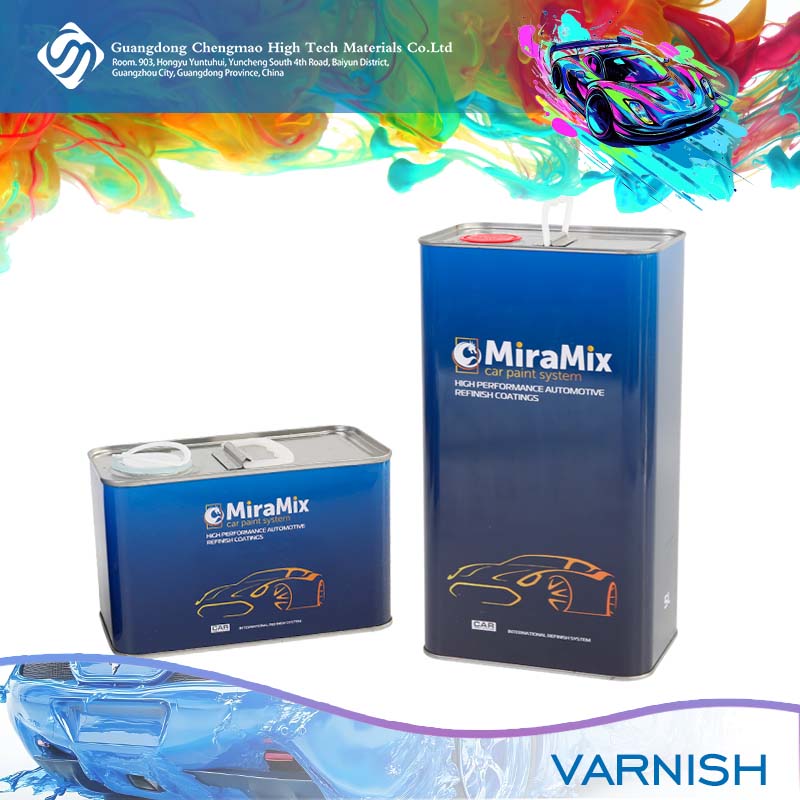
Not every product in the auto body shop uses paint hardeners. However, the most critical layers of a vehicle's exterior do. Knowing which products require a car paint hardener helps ensure a successful application.
The clear coat is the final layer applied to a vehicle. It provides the gloss, depth, along with ultraviolet protection. Almost all professional clear coats are two-component (2K) systems. This means they require a specific ratio of hardener to activate. If you omit the hardener in a 2K clear coat, the finish will fail. It will lack the necessary hardness, eventually washing away or peeling off.
Single-stage paints combine the color pigment with the protective gloss layer in one product. Many high-quality single-stage systems use paint hardeners to improve durability. While some older acrylic enamels could dry without a hardener, adding a car paint hardener significantly reduces drying time while exponentially increasing the toughness of the final finish.
High-build primers, particularly urethane primers, also utilize a hardener. This allows the primer to cure rapidly without shrinking, creating a stable foundation for the base coat. When you use a hardener in your primer, you ensure that the subsequent layers adhere properly, preventing issues like blistering or flaking down the line.

To better understand the impact of a car paint hardener, please review the table below. It compares one-component (1K) paints, which dry via evaporation, against two-component (2K) paints, which require a hardener.
Feature | 1K Paint System (No Hardener) | 2K Paint System (Requires Hardener) |
|---|---|---|
Curing Process | Solvent evaporation | Chemical cross-linking |
Durability | Low to moderate | Extremely high |
Chemical Resistance | Poor (vulnerable to spills) | Excellent (resists fuel, oils) |
UV Protection | Moderate | Superior |
Drying Time | Slower, dependent on humidity | Faster, controlled by the hardener |
Application | DIY touch-ups, temporary fixes | Professional auto body refinishing |
As the table illustrates, utilizing a hardener drastically improves the performance metrics of the finish.
The success of your painting project hinges on following the manufacturer's exact mixing ratios. A car paint hardener must be measured precisely. If you add too much hardener, the mixture will cure too quickly, potentially cracking or losing its gloss. If you add too little hardener, the paint may remain soft, trapping solvents underneath a semi-cured surface.
Typically, mixing ratios are presented as parts of paint, parts of hardener, followed by parts of reducer. For example, a 4:1:1 ratio means four parts clear coat, one part car paint hardener, along with one part reducer. Always use a proper mixing cup with clearly marked measurements to ensure accuracy.

Environmental factors play a massive role in how paint hardeners perform. Paint hardeners are formulated in different speeds—fast, medium, or slow—to accommodate varying shop temperatures.
When working in cooler temperatures, generally below 70 degrees Fahrenheit, a fast hardener is ideal. It accelerates the chemical reaction, preventing the paint from running while it cures. In moderate conditions, around 75 degrees Fahrenheit, a medium hardener provides the perfect balance of flow along with cure time. For hot days exceeding 85 degrees Fahrenheit, a slow hardener is mandatory. A slow car paint hardener keeps the paint "open" longer, allowing it to lay flat, preventing a textured, orange-peel finish.
Using the incorrect speed of hardener for your environment will lead to severe defects. Always check the weather forecast or your spray booth temperature before selecting your paint hardeners.
Investing in premium paint hardeners transforms the final result of your automotive project. Let us explore the primary benefits in greater detail.
The foremost advantage of using a car paint hardener is the resulting durability. The cross-linked molecular structure creates a finish that resists scratches, stone chips, along with everyday wear. When you apply a hardener, you effectively armor your vehicle.
Vehicles constantly encounter harsh substances, from gasoline spills at the pump to acidic bird droppings on the hood. A finish cured with a high-quality hardener repels these chemicals. Without a hardener, such substances would eat through the paint, exposing the bare metal to rust.
Over time, inferior finishes fade or become cloudy. Paint hardeners lock in the clear coat's structure, preventing ultraviolet rays from breaking down the polymers. This ensures that the vehicle maintains its deep, mirror-like gloss for years.

Does automotive paint need a hardener?
Yes, most professional automotive paints, specifically 2K primers, single-stage colors, alongside clear coats, require a hardener to cure properly. Without a hardener, these products will not dry into a durable, protective shell. Base coats (the color layer in a two-stage system) generally do not require a hardener, as they are covered by a catalyzed clear coat.
Can I use a different brand of hardener with my paint?
It is highly recommended to stay within the same product line. Paint hardeners are chemically engineered to react with specific resins. Mixing different brands can lead to unpredictable reactions, such as the paint failing to cure, losing its gloss, or peeling off entirely. Always pair your car paint hardener with its intended base product.
What happens if I forget to add the hardener to my clear coat?
If you spray a 2K clear coat without a hardener, it will remain sticky indefinitely. It will never harden. The only solution is to completely strip the uncured material off the vehicle using solvents, prep the surface again, then reapply the base coat followed by properly mixed clear coat.
How long does paint with a hardener take to cure?
While the surface may be dry to the touch within a few hours, the full chemical cross-linking process can take anywhere from 30 to 90 days, depending on the specific hardener used, ambient temperature, alongside humidity. During this time, it is advisable to avoid waxing the vehicle, allowing any trapped solvents to escape fully.
Are paint hardeners dangerous to handle?
Yes. Most automotive paint hardeners contain isocyanates, which are highly toxic if inhaled or absorbed through the skin. You must always wear a high-quality, properly fitted respirator, protective gloves, along with a full paint suit when mixing or spraying any products containing a hardener.

Understanding the science behind automotive refinishing ensures that your hard work results in a beautiful, long-lasting exterior. Whether you are repairing a small scratch or executing a complete vehicle restoration, recognizing the vital role of these chemical catalysts is the first step toward success.
Does automotive paint need a hardener? For a finish that looks spectacular while standing the test of time, a car paint hardener is absolutely non-negotiable. By choosing the correct speed for your environment, measuring your ratios meticulously, alongside prioritizing safety, you can achieve a flawless, factory-quality finish. Paint hardeners are the silent heroes of the auto body industry, turning fragile liquids into impenetrable shields.
For the highest quality automotive refinishing materials, we proudly recommend chengmao coating. Their advanced formulations ensure exceptional durability, brilliant gloss, and reliable curing under various conditions.
Email: 15119204649@163.com
Phone: +86-15119204649


