
Views: 0 Author: Site Editor Publish Time: 2026-07-27 Origin: Site


TL;DR:
Basecoat paint is the color layer applied before a clearcoat in automotive refinishing. It determines the depth, tone, and uniformity of a vehicle's finish. Choosing the right formulation—and pairing it with a compatible thinner—directly affects adhesion, coverage, and how professional the final result looks.
A fresh repair means nothing if the color doesn't match. You can sand, prime, and prep to perfection, yet still walk away with a blotchy, uneven finish if the basecoat stage is rushed or poorly executed. That's why professional painters and body shop technicians treat the basecoat stage as the most critical step in the refinishing process.
This guide breaks down how basecoat systems work, what factors affect application quality, and how to choose the right products for the job—including how Chengmao's automotive coating range supports professionals across more than 20 countries.


The basecoat is the color-bearing layer in a multi-stage refinishing system. Applied over a primer, it carries the pigment that defines a vehicle's appearance. On its own, it has little gloss and no protection against UV or weathering—that job belongs to the clearcoat applied on top.
What the basecoat does exceptionally well is deliver color accuracy and coverage. For body shops handling insurance repairs or factory color matches, this accuracy is non-negotiable. A slight mismatch in metallic flake orientation or pigment density becomes immediately visible under direct light.
Chengmao's basecoat paint line is formulated to deliver consistent color depth across multiple coats, with strong resistance to bleed-through from underlying layers.
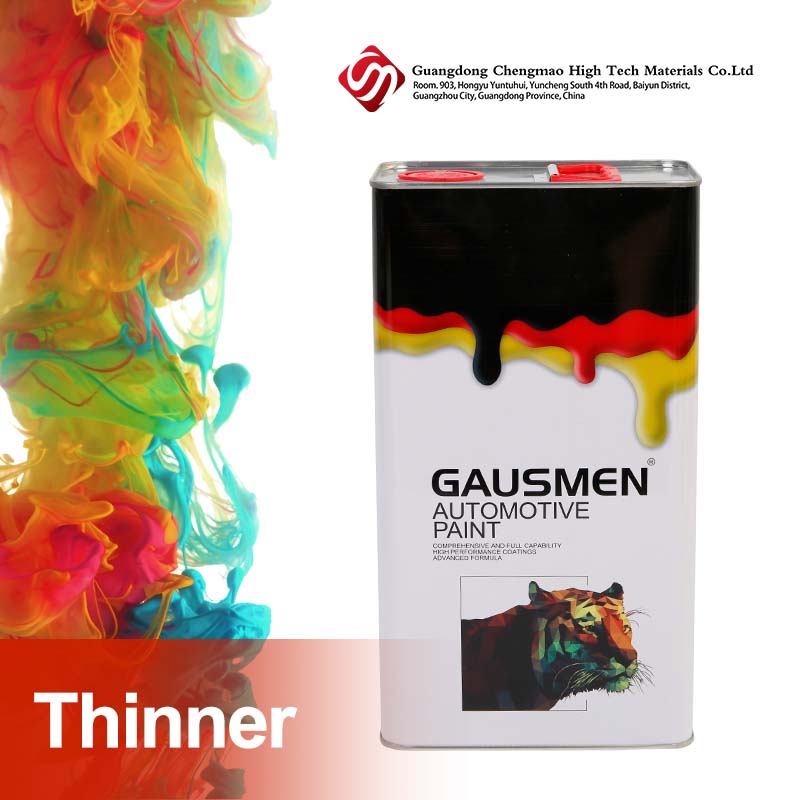
Thinner is often treated as an afterthought—but it's one of the most influential variables in spray application. The viscosity of your mixed basecoat determines how the material atomizes through the spray gun, how quickly it flashes off between coats, and how well it levels on the panel.
Too thick, and you risk sags, orange peel, and uneven metallic alignment. Too thin, and the color runs, loses hiding power, and may not build to the required film thickness. Temperature and humidity also play a role: a fast-evaporating thinner in hot conditions can cause dry spray and mottling, while a slow thinner in cold weather may extend flash times to the point where dust contamination becomes a problem.
Using a quality thinner liquid that's matched to your specific basecoat system and environmental conditions gives you repeatable results—coat after coat.

Body shop managers and automotive coating buyers often need to decide between 1K and 2K systems. The table below outlines the key differences:
Feature | 1K Basecoat | 2K Topcoat |
|---|---|---|
Hardener required | No | Yes |
Pot life after mixing | N/A (ready to use) | Limited (4–8 hours) |
Clearcoat needed | Yes | Optional |
Best use case | Color matching, panel repairs | Full-finish durability |
Dry time | Fast | Moderate |
UV resistance | Low (relies on clearcoat) | High |
Cost per application | Lower | Higher |
1K basecoat systems are the standard choice for color-stage work in collision repair. They offer fast flash times, excellent color matching, and compatibility with most clearcoat systems. 2K topcoats, by contrast, are better suited for applications where a standalone, high-durability finish is needed.
Not all basecoats are built the same. The right base coat for paint applications in professional settings should meet several performance standards before it earns a place in your mixing room.
Color accuracy is the starting point. The product needs to hold a consistent hue across multiple coats and over time—before and after the clearcoat is applied. Pigment suspension stability in the can matters here.
Hiding power determines how many coats you need to achieve full coverage. A high-hiding formulation saves both time and material, particularly on darker repair areas over lighter primers.
Adhesion to the primer layer affects the long-term integrity of the entire paint system. Poor adhesion leads to delamination, especially in high-moisture environments or climates with extreme temperature cycling.
Metallic control is relevant for metallic and pearl finishes. The basecoat must allow the metallic flake to orient evenly, or the finished panel will show blotchiness when viewed from different angles.
Chengmao has been manufacturing automotive coatings since 2007. With two production facilities, over 500 workers, and an annual output exceeding 12,000 metric tons, the company supplies body shops and distributors across more than 20 countries. Their 1K basecoat range is available in custom OEM formulations, meaning distributors can source color systems calibrated to their regional vehicle populations.
Even the best product underperforms when application conditions aren't right. Here are the practices that separate consistent, professional results from rework:
Surface prep first. Clean, degreased, and properly primed panels are the foundation of a good basecoat job. Contamination under the basecoat will show through the clearcoat.
Mix ratios matter. Follow the manufacturer's recommended mixing ratio for thinner. Guessing will cost you consistency.
Flash time between coats. Allow adequate flash time before applying the next coat. Trapping solvent under subsequent layers leads to solvent pop.
Spray environment. Booth temperature and humidity directly affect how the basecoat behaves. Work within the product's recommended application range.
Film build. Apply two to three medium coats rather than one heavy coat. This improves color uniformity and reduces the risk of runs.
Chengmao's value to distributors and body shop operators goes beyond the coating itself. The company holds ISO 9001, ISO 14001, and OHSAS 18001 certifications, and offers OEM customization across a portfolio of over 300 material formulas. For importers building a private-label brand, this means lower R&D costs and faster time to market.
Their product range covers every stage of the refinishing process: primer, putty filler, 1K basecoat, 2K topcoat, clearcoat, hardener, thinner, and spray equipment. A single supplier relationship covers the full system—which simplifies procurement, quality control, and technical support.
Color is what customers notice first. A mismatched or uneven basecoat turns a technically sound repair into a visible failure. Getting the basecoat stage right—with the correct product, the right thinner, and sound application technique—is what separates a professional result from one that requires a revisit.
Chengmao offers free samples for qualified distributors and body shop operators. Contact the team directly via WhatsApp or email to request samples, discuss OEM options, or get product recommendations matched to your market's needs.
Basecoat paint is the color layer applied over primer in a multi-stage automotive refinishing system. It carries the pigment and metallic or pearl effects that define a vehicle's appearance. A clearcoat is applied on top to provide gloss and UV protection.
Choose a thinner based on the ambient temperature, humidity, and the specific basecoat formulation. Fast thinners suit cooler conditions; slow thinners work better in heat. Always follow the manufacturer's recommended mixing ratio to maintain viscosity and flash time consistency.
A 1K basecoat requires no hardener and is always used with a separate clearcoat. A 2K topcoat includes a hardener and can provide UV protection without a clearcoat. For color-stage work in collision repair, 1K is the standard choice due to its speed and color accuracy.
Most refinishing jobs require two to three medium coats of basecoat to achieve full opacity and even color. Applying fewer, heavier coats increases the risk of runs and trapped solvents.
Yes. Chengmao offers OEM customization across more than 300 material formulas. Distributors can request custom formulations calibrated to regional vehicle color databases. Contact Chengmao directly to discuss specifications and minimum order requirements.


