
Views: 0 Author: Site Editor Publish Time: 2026-04-29 Origin: Site


In the world of high-end automotive painting, the difference between a "good" finish and a "show-quality" finish often lies in the invisible chemistry of the spray booth. While the pigments in a 1K basecoat or the resins in a 2K topcoat provide the color and protection, it is the solvent system that dictates the flow, leveling, and ultimate gloss of the paint film. For professionals, choosing high-performance thinners is not just a secondary task—it is a critical part of the coating formulation.
When a vehicle enters a refinishing facility, environmental factors such as temperature, humidity, and airflow immediately come into play. A technician must balance the evaporation rate of the solvent with the drying time of the paint to avoid common defects like "orange peel," "blushing," or "dry spray."
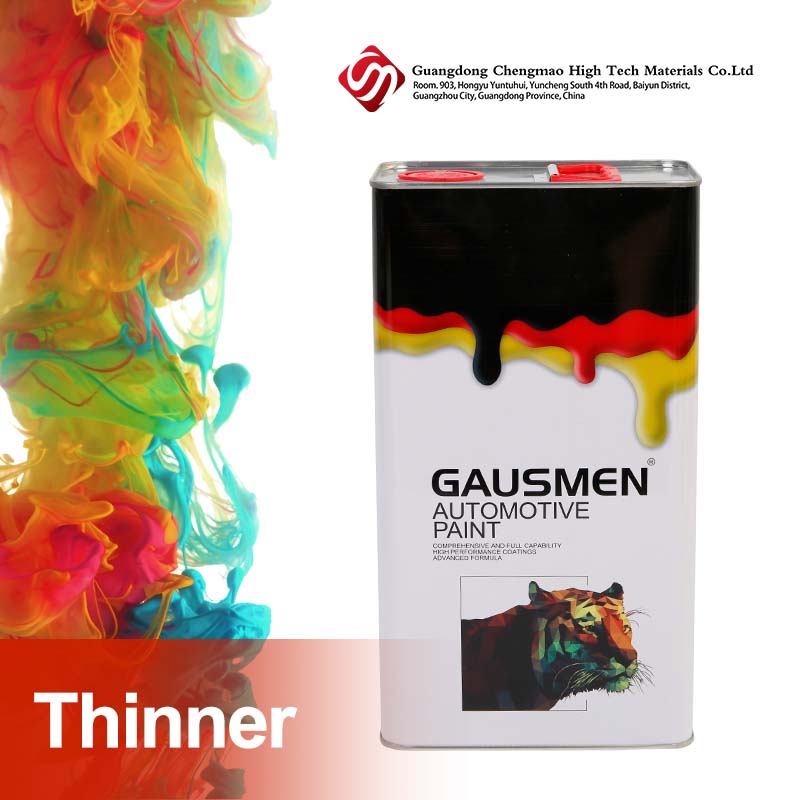

The primary purpose of adding solvents to paint is to reduce its viscosity to a level suitable for atomization through a spray gun. However, not all solvents are created equal. Modern paint thinners are complex blends of active, latent, and diluent solvents designed to evaporate at specific intervals.
During the initial "flash-off" period, the fastest-evaporating components leave the film, allowing the paint to set. The slower-evaporating "tail" solvents remain slightly longer, giving the paint molecules enough time to level out into a glass-like surface. This delicate balance is why using a generic hardware-store solvent can ruin a professional automotive paint job; the evaporation rates are simply not calibrated for the high-solid resins used in car paint.
In the automotive sector, precision is paramount. A high-grade automotive paint thinner is specifically formulated to be compatible with acrylic, polyester, and polyurethane resins. Using a high-quality thinner from a dedicated manufacturer like Chengmao ensures that the chemical bond between the primer, basecoat, and clearcoat remains intact.
Inferior solvents can lead to "solvent trap," where gas is trapped under the drying clearcoat, eventually causing pinholes or loss of gloss weeks after the car has left the shop. By using a tailored automotive thinner, technicians can achieve consistent results regardless of whether they are working in a dry, hot climate or a cool, humid environment.
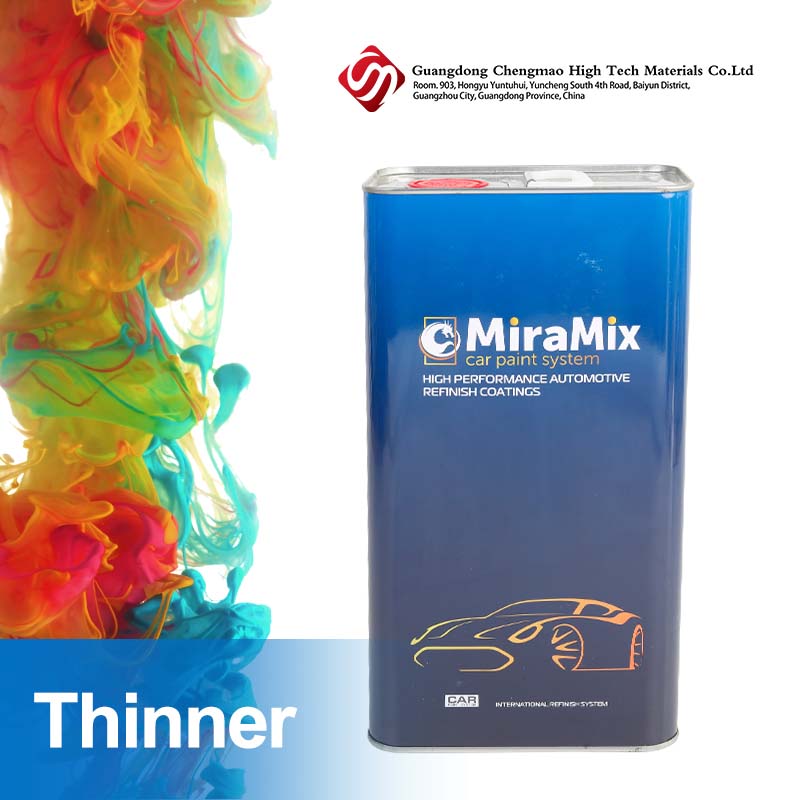

Selecting the correct solvent depends largely on the ambient temperature of the workspace. Using a "fast" thinner in high heat will cause the paint to dry before it levels, while using a "slow" thinner in cold weather can lead to sags and runs.
| Thinner Type | Ideal Temperature Range | Primary Application | Key Benefit |
| Fast Dry Thinner | 15°C – 20°C | Small spot repairs & cold weather | Rapid flash-off, minimizes dust pickup |
| Standard Thinner | 20°C – 30°C | General panel refinishing | Balanced flow and drying time |
| Slow Dry Thinner | Above 30°C | Large surface areas & high heat | Prevents dry spray, ensures high gloss |
| Universal Thinner | Varied | Primers and cleaning | Versatile compatibility across products |
Beyond the immediate visual results, the choice of solvent affects the long-term durability of the automotive coating. Solvents act as carriers; if they are too aggressive, they can "bite" into the previous layer too deeply, causing lifting or wrinkling. Conversely, if they are too weak, the adhesion between layers will be compromised.
Guangdong Chengmao New Material Technology utilizes advanced nanotechnology in its formulations to ensure that the solvents provide optimal "wetting" of the substrate. This allows the resins to penetrate the microscopic pores of the primer, creating a mechanical and chemical bond that resists weathering, UV radiation, and chemical exposure over time.
Working with volatile organic compounds (VOCs) requires a commitment to safety and environmental stewardship. Modern professional thinners are increasingly formulated to reduce hazardous air pollutants (HAPs) while maintaining the high performance required by the industry. Technicians should always follow these best practices:
Ventilation: Ensure the spray booth has a certified extraction system to manage solvent vapors.
PPE: Always wear a high-quality respirator with organic vapor cartridges and nitrile gloves.
Storage: Store all solvents in a cool, well-ventilated fireproof cabinet away from ignition sources.
The art of automotive painting is a marriage of skill and chemistry. By understanding the functional mechanics of thinners and the specific evaporation profiles of professional paint thinners, refinishing experts can elevate their work from a standard repair to a work of art. In an industry where the finish is everything, the choice of an automotive paint thinner is the ultimate secret to achieving a durable, brilliant, and flawless shine.


