
Views: 0 Author: Site Editor Publish Time: 2026-03-16 Origin: Site


Welcome to our detailed exploration of automotive coating catalysts. Whether you operate a professional auto body shop or you simply want to repair a scratched bumper at home, understanding the correct chemical components remains vital for success. Every flawless vehicle finish relies heavily on one specific component: the hardener. Without proper paint hardeners, your automotive coating will never dry or cure correctly.
In this comprehensive guide, we will explore the technical applications, distinct benefits, alongside the selection process for finding the perfect auto paint hardener. We aim to provide you with the necessary knowledge to achieve a durable, mirror-like finish on any vehicle. Please read on to discover how a simple hardener transforms liquid coatings into a resilient protective layer.
When you spray a vehicle, the liquid coating needs a mechanism to transition into a solid, durable shell. This transition occurs through a chemical reaction initiated by a hardener. Automotive coatings usually consist of two parts: the base color or clear coat, plus the catalyst.
Paint hardeners trigger cross-linking within the molecular structure of the resin. Once you mix an auto paint hardener into the base material, the curing process begins immediately. This chemical reaction creates a tough network that resists scratches, UV damage, chemical spills, plus daily weather exposure.
Without a hardener, two-part urethane paints will remain sticky indefinitely. You cannot rely on air evaporation alone to dry these modern coatings. Therefore, using the precise amount of auto paint hardener ensures the coating achieves its maximum intended hardness, gloss, plus longevity.


The active ingredient in most paint hardeners involves isocyanate compounds. When isocyanates meet the hydroxyl groups present in the acrylic or polyurethane resin, they form a solid urethane linkage. We refer to this process as curing. Because the auto paint hardener reacts specifically with the resin, you must always choose the correct hardener designed for your specific coating line.
Professionals know that one specific hardener does not suit every single situation. The environment in your spray booth directly dictates which auto paint hardener you must select.
Temperature variations play the largest role in your decision-making process. Paint hardeners evaporate and react at different speeds depending on the ambient heat. If you choose the wrong auto paint hardener for your current temperature, you might experience issues like orange peel, solvent pop, or loss of gloss.
Manufacturers design paint hardeners in three primary speed categories. Please review these variations carefully before mixing your materials.
A fast hardener works best in cold environments, typically below 65 degrees Fahrenheit. Because cold air slows down the chemical reaction, a fast auto paint hardener compensates by accelerating the cross-linking process. You should also use a fast hardener for small spot repairs where you need the surface to dry quickly to prevent dust contamination.
A standard hardener serves as the ideal choice for normal working conditions, usually between 65 degrees to 80 degrees Fahrenheit. Most technicians prefer this medium-speed auto paint hardener for painting complete panels or entire sides of a vehicle. It provides an excellent balance between flow, leveling, plus drying time.
When the temperature rises above 80 degrees Fahrenheit, a slow hardener becomes absolutely necessary. High heat causes coatings to dry too rapidly. A slow auto paint hardener prevents the surface from skinning over prematurely. By keeping the paint open longer, the slow hardener allows trapped solvents to escape, which prevents tiny bubbles known as solvent pop. We strongly suggest using a slow auto paint hardener when painting an entire car in a warm climate.
To help you visualize the differences, please review the following technical breakdown of common paint hardeners. This table outlines the typical mixing ratios, optimal temperature ranges, plus general drying times associated with various auto paint hardener types.
Hardener Type | Typical Mixing Ratio (Paint:Hardener) | Optimal Temperature Range | Dust-Free Drying Time | Full Cure Time |
|---|---|---|---|---|
Fast Auto Paint Hardener | 4:1 or 2:1 | 55°F - 65°F (13°C - 18°C) | 15 - 20 minutes | 12 - 18 hours |
Standard Auto Paint Hardener | 4:1 or 2:1 | 65°F - 80°F (18°C - 27°C) | 30 - 45 minutes | 18 - 24 hours |
Slow Auto Paint Hardener | 4:1 or 2:1 | 80°F - 95°F (27°C - 35°C) | 45 - 60 minutes | 24 - 48 hours |
Achieving a flawless finish requires exact measurements. When you mix your auto paint hardener, you must adhere strictly to the manufacturer guidelines.
Always use a clean mixing cup equipped with accurate ratio markings. Never guess the amount of hardener you pour into the cup. If you add too much auto paint hardener, the mixture will become brittle, which leads to cracking down the road. Furthermore, excessive hardener can actually slow down the curing process rather than speeding it up.
Conversely, if you add too little auto paint hardener, the cross-linking process remains incomplete. The vehicle surface will stay soft, making it vulnerable to scratches, stains, plus premature fading.
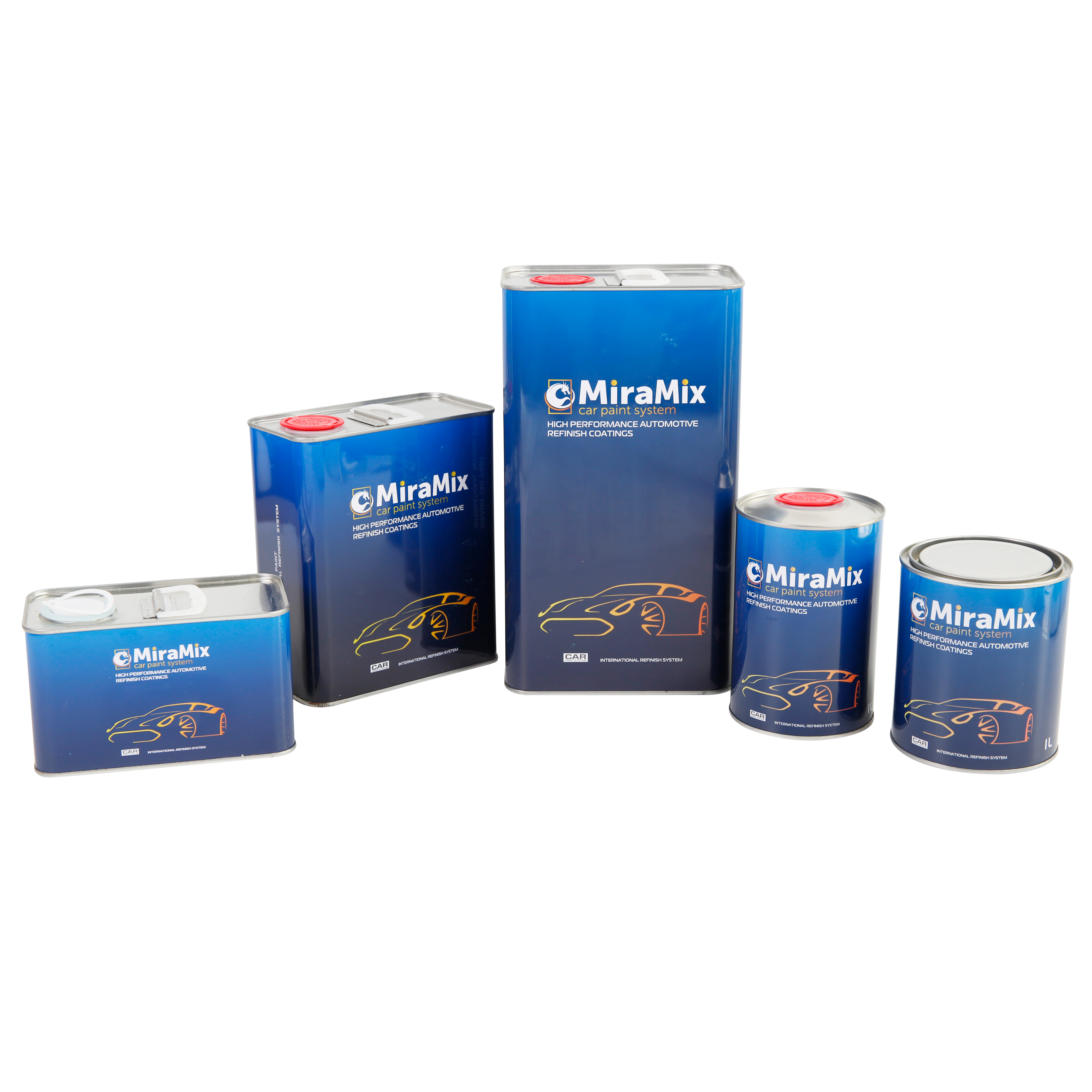

We highly recommend using a proper measuring stick or a digital scale to weigh your paint hardeners. Stir the mixture thoroughly. Please ensure you scrape the sides of the cup so all the auto paint hardener blends completely with the resin base.
Once mixed, the auto paint hardener gives the coating a specific "pot life." Pot life refers to the amount of time you have to spray the material before it hardens inside your spray gun. Always monitor your time carefully to prevent damaging your expensive painting equipment.
Even experienced painters sometimes encounter problems with paint hardeners. Understanding these common issues will help you correct them quickly.
If your clear coat looks dull after it dries, you might have used a fast auto paint hardener in a hot environment. The rapid drying prevents the coating from flowing out smoothly, causing a rough, dull appearance.
If you notice a sticky surface several hours after application, you likely failed to mix enough auto paint hardener into the batch. Unfortunately, you usually have to strip the sticky paint off completely before starting over. Always double-check your paint hardeners ratio prior to spraying.
Another issue involves moisture contamination. Paint hardeners remain highly sensitive to humidity. If you leave the lid off your auto paint hardener can, moisture from the air will react with the chemicals inside. This turns the liquid auto paint hardener into a solid, crystallized mess inside the tin. Please make sure you seal your paint hardeners tightly immediately after pouring.
We regularly receive excellent questions regarding the use of paint hardeners. Please review this FAQ section to clarify any remaining doubts you might have about auto paint hardener applications.
If you forget to add the auto paint hardener, the clear coat will never cure. It will remain a sticky, wet liquid on the surface of your vehicle. You must remove the uncured product using a mild solvent, prepare the surface again, then reapply the coating with the correct amount of hardener.
We advise against mixing brands. Chemical formulas vary significantly between manufacturers. Using an unmatched auto paint hardener can cause adverse reactions, including peeling, color shifting, or total failure to cure properly. Always stick to the same system.
Yes, paint hardeners definitely expire. Most sealed paint hardeners have a shelf life of one to two years. Once opened, the shelf life decreases dramatically due to exposure to atmospheric moisture. If your auto paint hardener looks cloudy, thick, or contains crystal formations, please discard it safely.
You should avoid using a slow auto paint hardener in cold weather. The cold air slows the reaction, while the slow hardener also delays the cure. This combination means your paint will stay wet for far too long, attracting massive amounts of dust, dirt, plus debris.
In the automotive refinishing industry, technicians often use the terms "activator" interchangeably with "auto paint hardener." Both products initiate the chemical cross-linking process required to cure two-part paints.
Thank you for exploring the critical functions of paint hardeners with us. Mastering the use of an auto paint hardener elevates your painting skills from amateur to professional level. By carefully matching your hardener to your shop temperature, measuring your ratios meticulously, plus storing your chemicals properly, you guarantee a brilliant, long-lasting finish on every vehicle.
When you seek premium quality materials for your next refinishing project, we strongly suggest you consider chengmao coating. Their advanced formulations provide excellent durability, brilliant gloss, plus exceptionally user-friendly application properties.
If you require further assistance or wish to discuss your specific auto paint hardener needs, please reach out to our support team using the details below.

Email: 15119204649@163.com
Phone: +86-15119204649


